Examlord-Lord of All Exams

JAMB 2026 Registration Guide: Fees, Deadlines & How-To


 If you're preparing for JAMB 2026, don’t miss this updated guide:


Exam BodyJoint Admissions and Matriculation Board (JAMB)
Exam TypeUnified Tertiary Matriculation Examination (UTME)
Exam DatesFriday, April 25, 2026 to Monday, May 5, 2026 (Main UTME)
Mock UTME DateMarch 7, 2026
Registration PeriodFebruary 3 to March 8, 2026
Sales of Forms PeriodFebruary 3 to March 8, 2026
Registration Fee₦8,700 for UTME (with mock examination)
 ₦7,200 for UTME (without mock examination)
 $30 for foreign candidates
Printing of Exam SlipsFrom April 10, 2026
Creation of Profiles for RegistrationStarted on January 31, 2026


🛠️ Registration Process

- Step 1: Register your details  

- Step 2: Pick a nearby test centre  

- Step 3: Upload your passport photo  

- Step 4: Settle payments via bank or online  

- Step 5: Print e-slip and exam confirmation


👉 For a detailed walkthrough with screenshots and insider tips, check out the full article on MyJamb2026.com—your go-to JAMB 2026 resource!

Waec 2025 Chemistry Practical Answers-Examlord.Net

☑️ ExamLord Team
☑️ EXAM: Waec 2025
☑️ SUBJECT: Chemistry Practical
☑️ PIN: 134
=========================
Chemistry Practical-ANSWERS
Answers Loading....
=======================


=======================
COMPLETED!!!

PLEASEC DON'T FORGET TO SHARE THIS PIN/ANSWERS WITH YOUR FRIENDS/CLASSMATES
ALWAYS REMEMBER:WE ARE THE LORD OF ALL EXAMS

WAEC Office Practice Questions and Answers 2025 (OBJ & Essay)


WAEC Office Practice Essay 2025

Number 1

(1ai)
Alphabetical Filing System: This system organizes files and documents based on the names of individuals, organizations, or subjects in alphabetical order (A–Z). At SKJ Services Ltd, each branch of the company keeps the files of its staff and customers in alphabetical order, making it easier to retrieve files when needed.

(1aii)
(PICK ANY THREE)
(i) Simplicity
(ii) Quick Access
(iii) Flexibility
(iv) Cost-Effective
(v) No Need for Indexing
(vi) Easier for Small Businesses

(1b)
Memo (Memorandum)


(1c)
(i) It is used within an organization to formally request items or services.
(ii) Contains details like item description, quantity, purpose, and requester’s details.
(iii) It usually requires approval from a superior or head of department.
(iv) Helps track and authorize internal supply or purchases.

(1d)
(i) Good Human Relations:
(ii) Politeness
(iii) Punctuality
(iv) Good Communication Skills

==================

Number 2

(2a)
A report is a written or verbal communication that provides information, analysis, and recommendations on a specific topic or issue, often based on research, investigation, or data analysis.

(2b)
(i)Title page
(ii)Table of contents
(iii)Executive summary
(iv)Introduction
(v)Body
(vi)Conclusion
(vii)Recommendations


(2c)
(i)Informed decision-making: Reports provide valuable insights and data to support informed decision-making.
(ii)Accountability: Reports help organizations track progress, identify areas for improvement, and demonstrate accountability.
(iii)Communication: Reports facilitate communication among stakeholders, including employees, management, and external partners.
(iv)Problem-solving: Reports can identify problems, analyze causes, and recommend solutions.
(v)Evaluation and improvement: Reports can evaluate performance, identify areas for improvement, and inform strategic planning.

==================

Number 3

==================

Number 4

==================

Number 5

WAEC Tourism Questions and Answers 2025 (OBJ & Essay)


WAEC Tourism OBJ 2025

01-10: ADCBDAADCA
11-20: DCDDDDAAAA
21-30: ACBADAADCA
31-40: BDDCDCDBAC

WAEC Tourism Essay 2025

Number 1

(1)
(PICK ANY FOUR)
(i) Prehistoric Era (Early Travel): When humans traveled for survival, migration, and trade.
(ii) Ancient Era: Marked by travel for religious pilgrimages (e.g., Hajj, Olympia) and trade (e.g., Silk Road).
(iii) Grand Tour Era (17th–18th Century): Wealthy Europeans traveled for cultural education.
(iv) Industrial Revolution Era (19th Century): Steam engines and railways made travel faster and more accessible.
(v) Modern Mass Tourism Era (20th Century): Air travel and package holidays democratized tourism.
(vi) Digital/Contemporary Era (21st Century): Online bookings, ecotourism, and space tourism emerge.

==================

Number 2

(2)
(PICK ANY TWO)
(i) Economic Planning: Helps governments allocate resources and develop infrastructure based on tourist inflows.
(ii) Policy Formulation: Provides data for creating tourism-friendly policies and regulations.
(iii) Marketing Strategies: Enables targeted promotions by identifying tourist demographics and preferences.
(iv) Employment Assessment: Measures job creation in hospitality, transport, and related sectors.

==================

Number 3

(3)
(a) Niger and Benue Confluence: Kogi State
(b) Ikogosi Warm Spring: Ekiti State
(c) Ogbunike Cave: Anambra State
(d) Wikki Warm Spring: Bauchi State

=============

Number 4

(4)
Average annual visits = 6,000
Total period = 6 years
Total inflow = 6,000 × 6 = 36,000 tourists

Answer: The resort received 36,000 tourists over the 6-year period.

==================

Number 5

(5)
(i)Personal details: Name, date of birth, nationality, and other identifying information.
(ii)Passport number: A unique number assigned to the passport.
(iii)Photograph: A photograph of the passport holder.
(iv)Validity period: The date of issue and expiration of the passport.

================

Number 6

(6)
(i)Travel agencies
(ii)Tour operators
(iii)Travel guides
(iv)Visa services

==================

Number 7

(7)
(i)Economic benefits: Tourism can generate income and create jobs for local people.
(ii)Cultural preservation: Tourism can help preserve local culture and traditions by promoting cultural exchange and appreciation.

==================

Number 8

(8a)
An excursion is a short trip or outing, often for leisure or educational purposes, to a specific destination or attraction.

(8b)
Recreation refers to activities or experiences that provide enjoyment, relaxation, or leisure, such as sports, hobbies, or entertainment.

==================

Number 9

(9)
(i)Accommodation services
(ii)Transportation services
(iii)Tour guiding services
(iv)Travel agency services

==================

Number 10

(10)
(i)Kainji National Park
(ii)Yankari National Park
(iii)Cross River National Park
(iv)Old Oyo National Park

==================

Number 11

(11a)
Leisure refers to free time or activities that individuals engage in for enjoyment, relaxation, or personal satisfaction, outside of work, school, or other obligations.

(11b)
(i)Uniqueness: A unique feature or characteristic that sets the attraction apart from others.
(ii)Accessibility: Easy to reach and access, with adequate infrastructure and transportation options.
(iii)Aesthetic appeal: Visually appealing or attractive, with scenic views, architecture, or cultural significance.
(iv)Amenities: Availability of facilities and services, such as food, beverages, and restrooms, to enhance the tourist experience.
(v)Authentici

(11c)
(i)Accommodation: Hotels, resorts, hostels, or other types of lodging that provide tourists with a place to stay.
(ii)Food and beverage services: Restaurants, cafes, bars, or other establishments that provide tourists with dining options.
(iii)Recreational facilities: Swimming pools, gyms, spas, or other facilities that provide tourists with opportunities for relaxation and entertainment.
(iv)Guided tours and services: Guided tours, tourist information centers, or other services that help tourists navigate and understand the destination.

==================

Number 12

(12a)
A visitor in tourism is a person who travels to a destination outside of their usual environment for a period of less than a year, for purposes such as leisure, business, education, or other personal reasons.

(12b)
(i)Accommodation: Tourists spend money on hotels, resorts, hostels, or other types of lodging.
(ii)Food and beverages: Tourists spend money on meals, snacks, and drinks at restaurants, cafes, or other food establishments.
(iii)Transportation: Tourists spend money on transportation costs, such as flights, taxis, rental cars, or public transportation.
(iv)Activities and attractions: Tourists spend money on entrance fees, guided tours, or other activities and attractions, such as museums, theme parks, or cultural events.

(12c)
(i)Historical monuments: Buildings, structures, or sites of historical significance, such as ancient temples, castles, or monuments.
(ii)Cultural traditions: Customs, practices, and traditions that are unique to a particular nation or community, such as music, dance, or art.
(iii)Natural heritage: Unique natural features or landscapes, such as national parks, wildlife reserves, or scenic vistas.
(iv)Cuisine: Traditional foods, cooking methods, and culinary practices that are characteristic of a particular nation or culture.
(v)Language and literature: The language, literature, and literary heritage of a nation, including works of famous authors, poets, or writers.

==================

Number 14

(14a)
(i)Tourism boards or authorities: Government-funded organizations that promote and support tourism development.
(ii)Tourism investment banks or funds: Financial institutions that provide funding for tourism-related projects and businesses.

(14b)
(i)Discounts and packages: Offering special deals or packages that include discounted rates for accommodations, activities, or services.
(ii)Free gifts or incentives: Providing free gifts or incentives to customers who book or purchase tourism products or services.
(iii)Contests and competitions: Running contests or competitions that encourage customers to engage with tourism products or services.
(iv)Loyalty programs: Implementing loyalty programs that reward repeat customers with exclusive benefits or re

(14c)
(i)Digital marketing: Using online channels, such as social media, email, and search engine optimization, to promote tourism products or services.
(ii)Targeted advertising: Creating targeted advertising campaigns to reach specific demographics or interest groups.
(iii)Partnerships and collaborations: Partnering with other tourism businesses, organizations, or stakeholders to promote tourism products or services.
(iv)Event marketing: Hosting or participating in events, such as festivals, conferences, or trade shows, to promote tourism products or services.
(v)Content marketing: Creating and sharing valuable, relevant, and consistent content to attract and retain customers, and ultimately drive tourism sales.

WAEC Fisheries (Alt B) Questions and Answers 2025 (OBJ & Essay)


WAEC Fisheries (Alt B) OBJ 2025

01-10: ACDAADDBCD
11-20: ABCCDBABDD
21-30: CBCDCACCDB
31-40: BADABDDAAB

WAEC Fisheries (Alt B) Essay 2025

Number 2

(2a)
(PICK ANY FIVE)
(i) Select a suitable site with good water supply and proper drainage.
(ii) Clear the area of any vegetation, debris, or obstacles.
(iii) Mark the boundaries of the pond and determine the shape and size.
(iv) Excavate the pond to the desired depth, ensuring proper sloping.
(v) Construct an inlet and outlet for water flow, ensuring proper drainage.
(vi) Line the bottom with clay or compact soil to prevent water leakage.
(vii) Fill the pond with water and allow it to settle for a few days.
(viii) Install aeration systems or water fountains if necessary.
(ix) Check for any leaks or issues and make necessary adjustments.
(x) Add appropriate fish species and ensure regular maintenance.

(2bi)
(PICK ANY THREE)
(i) Clear the pond of debris, weeds, and any obstacles.
(ii) Level and shape the pond to ensure proper water distribution.

(2bii)
(PICK ANY FOUR)
(i) Agricultural lime (calcium carbonate)
(ii) Quicklime (calcium oxide)
(iii) Hydrated lime (calcium hydroxide)
(iv) Dolomitic lime (calcium magnesium carbonate)
(v) Burnt lime
(vi) Slaked lime

(2c)
(PICK ANY FOUR)
(i) Reduces light penetration, affecting the growth of aquatic plants and plankton.
(ii) Decreases oxygen levels in the water, which can stress fish.
(iii) Impairs fish feeding behavior, as they rely on clear water to locate food.
(iv) Increases the risk of disease by limiting water quality and increasing pathogens.
(v) Causes sedimentation, which can clog gills and harm fish.
(vi) Reduces the overall aesthetic and environmental quality of the pond.

(2d)
(PICK ANY FOUR)
(i) Provide a balanced and nutritious diet to promote health and reproductive performance.
(ii) Ensure proper water quality, including maintaining appropriate temperature, pH, and oxygen levels.
(iii) Regularly check for diseases and parasites, and treat them promptly.
(iv) Maintain a proper breeding environment, including suitable breeding tanks or ponds.
(ii) Perform periodic health checks and remove any sick or weak fish.
(vi) Rotate or rest broodstock periodically to prevent overuse and ensure continued fertility.
(vii) Provide ample space for movement and reduce stress by avoiding overcrowding.
(viii) Manage breeding cycles to ensure the right timing for reproduction.

==================


Number 3

(3ai)
(PICK ANY TWO)
(i) It is cost-effective or free compared to buying from hatcheries.
(ii) It provides genetic diversity in fish stock.
(iii) Wild fish seeds may be more resilient to diseases.
(iv) It supports local fish biodiversity.
(v) It reduces dependency on hatchery facilities.
(vi) It offers a natural selection of species suited to the local environment.

(3aii)
(i) Clarias gariepinus (African catfish)
(ii) Oreochromis niloticus (Nile tilapia)

(3bi)
(PICK ANY FOUR)
(i) Ensure good water quality (pH, oxygen level, clarity).
(ii) Maintain appropriate water temperature.
(iii) Acclimatize fish before releasing into the pond.
(iv) Check for the absence of predators in the pond.
(v) Stock at the recommended density.
(vi) Monitor fish health and behavior after stocking.

(3c)
Number of fish = 5,000
Average weight per fish = 200 g = 0.2 kg
Total weight = 5,000 × 0.2 = 1,000 kg
Feed rate = 4% of body weight = 4/100 × 1,000 = 40 kg
Since feeding is done twice daily, each feeding = 40/2 = 20 kg

Total daily feed required = 40 kg


(3d)
(PICK ANY FOUR)
(i) Water temperature
(ii) Fish species
(iii) Fish size and age
(iv) Water quality (e.g., dissolved oxygen, pH)
(v) Type and quality of feed
(vi) Fish health status

WAEC Data Processing Questions and Answers 2025 (OBJ & Essay) Educational softwareData mining tools


WAEC Data Processing OBJ 2025

01-10: BDDACCADBB
11-20: ACCBBCBBBB
21-30: CCDBCBBCCD
31-40: ABCBCACCDA


WAEC Data Processing Essay 2025

Number 1

Data

(1ai)

Data processing refers to the series of operations performed on data to extract, transform, and load information into a useful and meaningful form. It involves manipulating and analyzing data to produce meaningful results, such as reports, summaries, or forecasts.

(1aii)

Data collation refers to the process of gathering, collecting, and organizing data from various sources into a single, unified view. It involves aggregating data from different places, such as databases, files, or spreadsheets, to create a comprehensive dataset.

(1b)


The Data Processing Cycle, also known as the Information Processing Cycle.

(1c)

(i)Speed

(ii)Accuracy

(iii)Capacity


==================

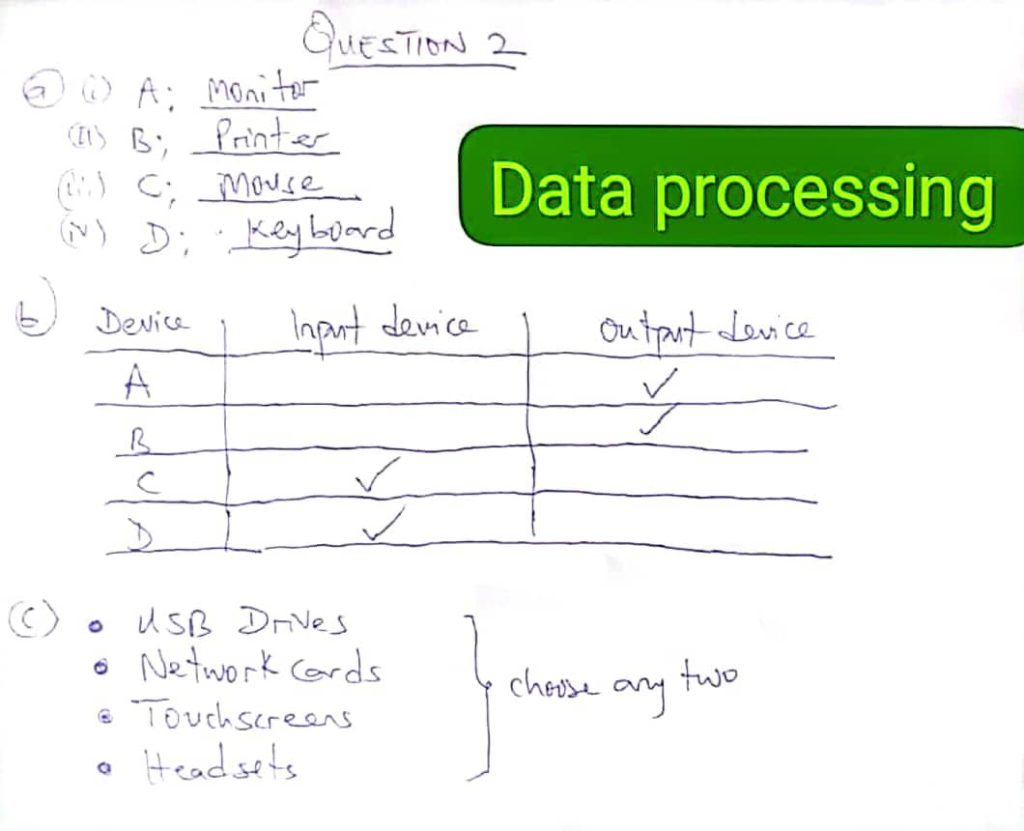
Number 2

==================

Number 3

Data

(3a)

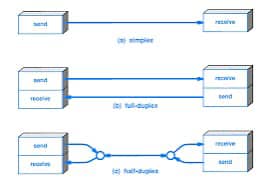
(i) Simplex is a mode where data flows in one direction only, from sender to receiver, like a radio broadcast.

(ii) Half duplex allows data to flow in both directions, but not simultaneously, like a walkie-talkie where only one party speak

(iii) Full duplex enables data to flow in both directions simultaneously, like a telephone conversation where both parties can talk and listen at the same time.

(3b)

(i) simplex:

Television broadcasting.

(ii) half duplex:

Internet chat.

(iii) full duplex:

Telephone call.

==================

Number 4

(4a)

Hackers are individuals who gain unauthorized access to  computer systems or networks, often to steal data or cause damage.

*WHILE*

Spammers send unsolicited or irrelevant messages, usually in bulk, often for advertising or phishing purposes.

(4b)

(PICK ANY ONE)

(i) Enhances Excel functionality (e.g., advanced data analysis).

(ii) Automates repetitive tasks.

(iii) Provides specialized tools (e.g., Solver, Analysis ToolPak).

(iv) Integrates Excel with other software or systems.

(v) Supports custom formulas and functions.

(vi) Improves productivity with custom user interfaces.

(4c)

(i) Cookies: Small files stored on a user’s device by websites to remember information like login details or preferences.

(ii) Plugin: A software component that adds specific features to an existing  computer program (e.g., video player plugin in a browser).


(iii) Web crawlers: Automated programs that browse the web to index content for search engines like Google.

==================

Number 5

(5a)

Presentation software

(5bi)

(i) Click on the “Home” tab

(ii) Click on “New Slide” in the Slides group

(iii) Choose a slide layout from the dropdown options

(5bii)

(i) Select the slide you want to delete in the slide pane

(ii) Right-click on the selected slide

(iii) Click on “Delete Slide” from the context menu

(5c)

(i) Microsoft PowerPoint

(ii) Google Slides

(5di)

(i) Creating presentations for meetings or lectures

(ii) Designing slideshows for educational or business purposes

(5dii)

(i) Transitions are effects that occur between slides when moving from one slide to another, while animations are effects applied to objects within a slide.

(ii) Transitions are applied to whole slides, while animations are applied to text, images, or other objects.

(iii) Transitions enhance slide navigation, while animations enhance the presentation of individual elements.


(iv) Transitions occur once per slide, while animations can occur multiple times within the same slide.

(5ei)

(i) Click on the Slide Show tab

(ii) Click on From Beginning or From Current Slide

(iii) Press the F5 key as a shortcut to start from the beginning

(iv) Use the arrow keys to navigate through slides

(5eii)

(i) Click on the File tab

(ii) Select Print from the menu

(iii) Under Settings, click the dropdown under “Full Page Slides”

(iv) Choose 6 Slides Horizontal or Vertical under “Handouts”.

==================

Number 6

(6a)

(i) Open MS Word.

(ii) Click on the “Mailings” tab.

(iii) Select “Start Mail Merge” and choose the document type.

(iv) Click “Select Recipients” and choose “Use an Existing List.”

(v) Browse and select the database.

(vi) Insert merge fields using “Insert Merge Field.”

(vii) Place fields in the appropriate positions.

(viii) Format the document as needed.

(ix) Save the main document.

(x) Click “Finish & Merge.”

(xi) Choose “Edit Individual Documents” or “Print Documents.”

(xii) Select all or specific records to merge.

(xiii) Preview to confirm formatting.

(xiv) Finalize the merge process.

(xv) Save or print the final merged documents.

(xvi) Close the main document.

(xvii) Back up the database and merged documents.

(6b)

(i) Click “Preview Results” under the “Mailings” tab.

(ii) Browse through records using the navigation arrows.

(iii) Click “Finish & Merge” and select the desired output to print or save.

WAEC Photography Questions and Answers 2025 (OBJ & Essay)


WAEC Photography OBJ 2025

1-10: ————————–

11-20: ————————-


21-30: ————————

31-40: ————————


WAEC Photography Essay 2025

Number 1

==================

Number 2


Number 3

==================

Number 4

==================


Number 5